
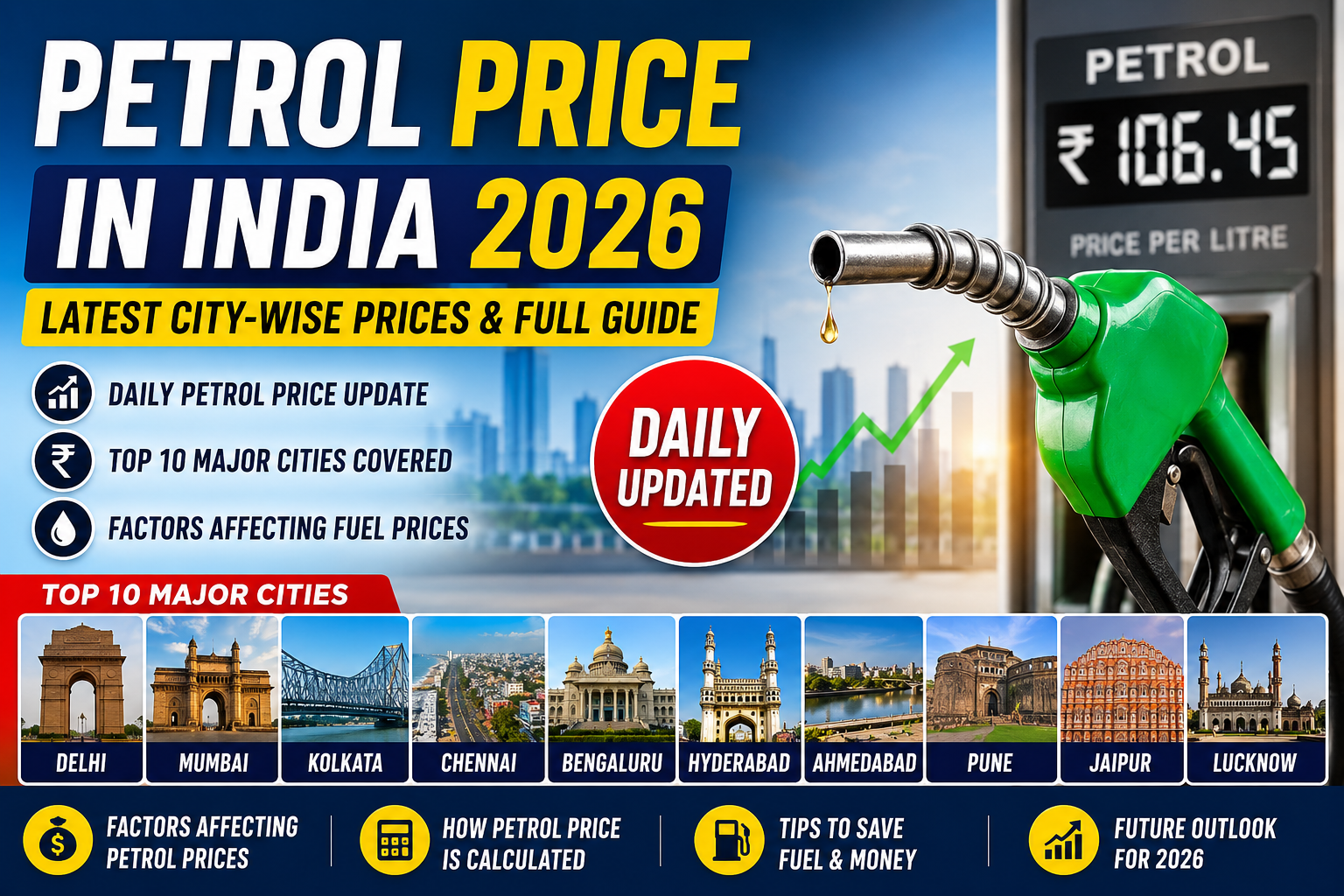
Petrol prices in India continue to fluctuate in 2026 due to changes in international crude oil prices, government taxes, exchange rates, and fuel demand. Whether you’re planning a long road trip, managing monthly fuel expenses, or comparing fuel costs across cities, knowing the latest petrol price in India 2026 can help you budget effectively.
In this guide, you’ll find the latest information about today petrol price in India, major factors affecting fuel prices, state-wise taxation, and petrol rates in India’s top cities. We also explain how petrol prices are calculated and answer frequently asked questions.
About Petrol Price in India 2026 – Overview
India follows a dynamic fuel pricing system, where petrol prices are revised daily by major Oil Marketing Companies (OMCs) based on global market conditions. This means the today petrol price in India may differ slightly every morning depending on international crude oil trends and currency exchange rates.
Petrol Price Highlights 2026
| Particular | Details |
| Fuel Type | Petrol |
| Pricing System | Daily Dynamic Pricing |
| Price Revision Time | Every Morning (Approx. 6 AM) |
| Major Fuel Companies | Indian Oil, Bharat Petroleum, Hindustan Petroleum |
| Price Depends On | Crude Oil, Taxes, Exchange Rate, Dealer Commission |
| Currency | Indian Rupee (₹) |
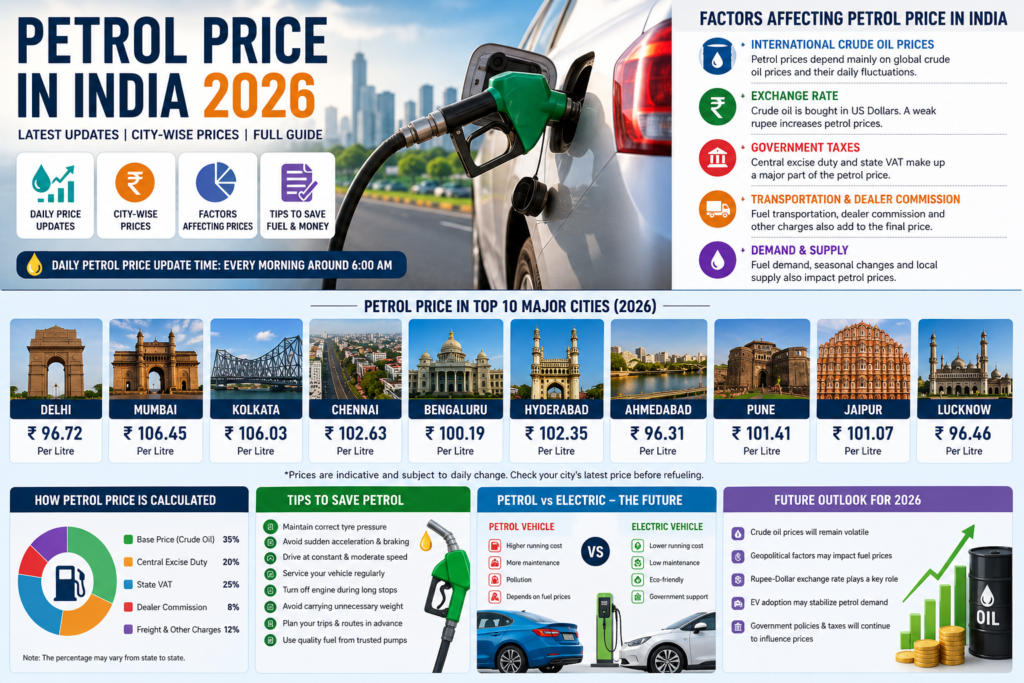
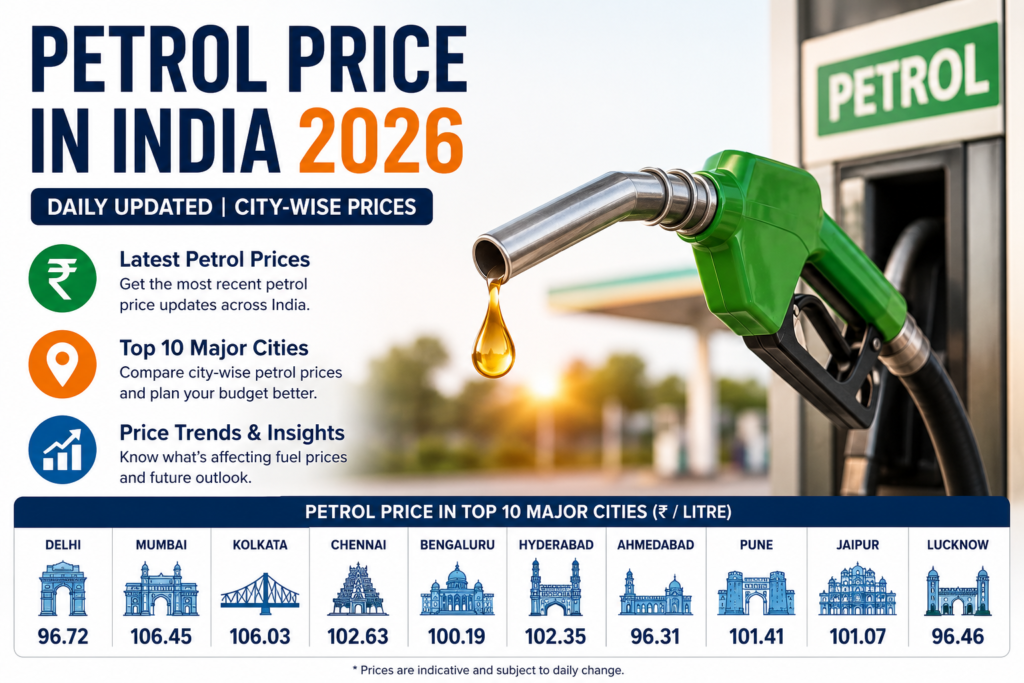
Petrol Price in Delhi 2026
Delhi continues to have one of the lowest petrol prices among metro cities because of comparatively lower VAT. The capital city serves as a benchmark for fuel pricing across India.
Vehicle owners in Delhi benefit from relatively affordable fuel costs, making it one of the preferred cities for motorists. Daily price revisions ensure that petrol rates reflect changes in global oil markets and exchange rates.
Petrol Price in Mumbai 2026
Mumbai generally records one of the highest petrol prices in India because Maharashtra levies higher state taxes on petroleum products.
Residents and commercial vehicle operators often experience higher transportation costs due to increased fuel prices. Daily revisions may slightly increase or decrease the retail price depending on international crude oil trends.
Petrol Price in Kolkata 2026
Petrol prices in Kolkata remain influenced by West Bengal’s VAT structure and dealer commission. Compared to Delhi, fuel prices are usually higher but remain competitive with other eastern states.
Motorists should regularly check today’s petrol price before long-distance travel, especially when fuel costs fluctuate due to global market movements.
Petrol Price in Chennai 2026
Chennai experiences petrol price revisions every morning under India’s dynamic pricing mechanism. Tamil Nadu’s tax policies influence the final retail price paid by consumers.
With increasing vehicle ownership in the city, petrol prices significantly impact household transportation budgets and logistics businesses.
Petrol Price in Bengaluru 2026
Bengaluru is among India’s fastest-growing metropolitan cities, with millions of vehicles using petrol daily. Karnataka’s VAT contributes to the overall retail price of petrol.
Because of heavy traffic and increasing fuel consumption, even small changes in petrol prices can affect commuters and delivery businesses across the city.
Petrol Price in Hyderabad 2026
Hyderabad continues to witness steady fuel demand due to rapid urban development and expanding commercial activities.
Petrol prices here are influenced by Telangana’s taxation policy along with international crude oil prices. Consumers can expect daily revisions that reflect market changes.
Petrol Price in Ahmedabad 2026
Ahmedabad remains one of Gujarat’s busiest commercial hubs. Petrol prices here are generally competitive compared to several other major cities because of state tax policies.
Business owners, transport operators, and private vehicle users closely monitor daily fuel price updates to manage operating costs.
Petrol Price in Pune 2026
Pune has experienced rapid growth in vehicle ownership over the past decade, making petrol prices an important factor for daily commuters.
Retail petrol prices in Pune include central excise duty, state VAT, freight charges, dealer commission, and applicable local taxes.
Petrol Price in Jaipur 2026
Jaipur’s petrol prices are revised every day according to the national dynamic pricing model. Rajasthan’s VAT structure affects the final fuel price available at petrol pumps.
Travellers and residents should compare today’s petrol prices before refueling to manage transportation expenses effectively.
Petrol Price in Lucknow 2026
Lucknow is one of North India’s fastest-growing cities, with increasing demand for petrol among private vehicle owners and commercial operators.
Petrol prices here depend on Uttar Pradesh’s taxation policy, international crude oil prices, and exchange rate fluctuations. Daily revisions help maintain market-linked pricing across fuel stations.
Factors Affecting Petrol Price in India
Several national and international factors determine the petrol price in India every day.
1. International Crude Oil Prices
India imports a significant portion of its crude oil requirements. Any rise or fall in global crude prices directly affects domestic petrol prices.
2. Exchange Rate
Crude oil is purchased in US Dollars. If the Indian Rupee weakens against the Dollar, petrol prices generally increase.
3. Central Government Taxes
The Central Government imposes excise duty on petrol, which forms a major component of the retail fuel price.
4. State Government VAT
Every state charges different Value Added Tax (VAT), causing petrol prices to vary across cities.
5. Dealer Commission
Petrol pump dealers receive a commission for selling fuel, which is included in the final retail price.
6. Transportation and Freight Charges
Fuel transportation costs from refineries to retail outlets also contribute to the overall petrol price.
How Petrol Price is Calculated in India
The final petrol price includes several components:
- Base price of crude oil
- Refinery processing cost
- Freight charges
- Dealer commission
- Central Excise Duty
- State VAT
- Local taxes (where applicable)
These combined components determine the today fuel price in India.
Why Petrol Prices Differ Between Cities
Many people wonder why petrol costs more in one city than another.
The major reasons include:
- Different State VAT rates
- Municipal taxes
- Transportation expenses
- Dealer commission
- Local government policies
Because each state follows its own taxation policy, petrol prices are never identical throughout India.
Tips to Save Money on Petrol
Reducing fuel consumption can help lower monthly transportation expenses.
- Maintain correct tyre pressure.
- Avoid sudden acceleration.
- Service your vehicle regularly.
- Drive at consistent speeds.
- Turn off the engine during long stops.
- Plan routes efficiently.
- Avoid carrying unnecessary weight.
- Use quality fuel from authorized petrol pumps.
Future Outlook for Petrol Prices in India 2026
Fuel experts believe petrol prices in 2026 will continue to depend largely on:
- Global crude oil supply
- OPEC production decisions
- Geopolitical developments
- Rupee-Dollar exchange rate
- Government taxation policies
- Domestic fuel demand
With India expanding its electric vehicle ecosystem and alternative fuel infrastructure, petrol demand may gradually stabilize over the coming years. However, petrol will continue to remain one of the country’s primary transportation fuels in 2026.